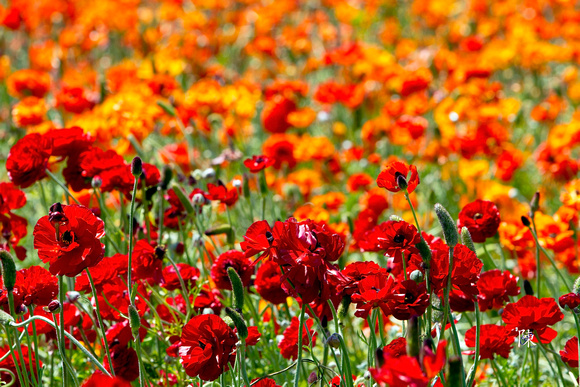
Situated on 50 acres of hillside overlooking the Pacfic ocean are the Carlbad Flower Fields.  Planted on the main fields are the Giant Tecolote Ranunculus flowers.  Just below, towards the highway are the Carlbad Premium Outlets and up and over the hill is Legoland.  As odd as the location may be, the Flower Fields have been there since 1965 and has been a popular tourist attraction due to its proximity to the highway.   It was started by the Frazee family with seeds brought to the area by Luther Gage.  Every year, these fields are open to the public for a limited time, generally during the spring when the flowers are in full bloom.

This year, the pattern of the fields has changed for the first time in 15 years.  The new color pattern was designed by a professional colorist.

Surrounding the fields are other flower oriented attractions.   One of the most notable is the historic Poinsettia Display where you can find the world famous Ecke poinsettias.  Aside from the Poinsettia display, there are the antique tractor rides around the field, the “Artist” gardens, the American Flag of flowers, the Sweet Pea maze, the Cymbidium Orchid Greenhouse and Santa’s Playground to keep the kids busy.

During this visit, Canon happened to be sponsoring a mini-class on macro-photography.  As with a free or low cost events (you need to pay admission to get into the fields, otherwise free), the barn was packed.

If you get hungry after walking the fields, two exits north on I-5 in downtown Carlsbad is an excellent italian restaurant, Vigilucci’s Cucina Italiana, where they claim to make everything fresh and to order.  True to their word, I had special ordered a dish of pasta that was very well prepared.  Highly recommended.

For more information:

For more photos, visit my gallery.

Website Link:  http:www.theflowerfields.com

Restaurant:  Vigilucci’s Cucina Italiana
2943 State Street
Carlsbad, CA 92008
(760) 434-2500

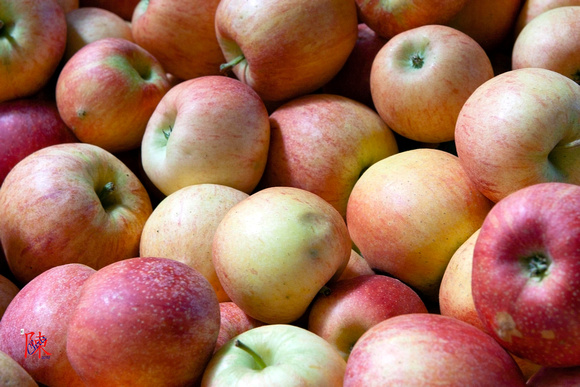
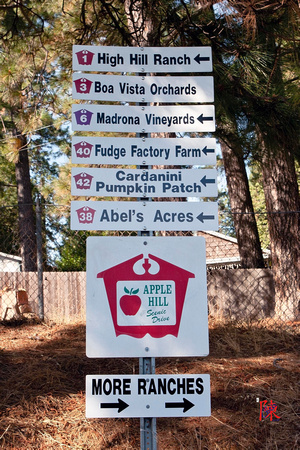
As the cool crisp air of fall arises, I long for the New England tradition of apple picking and everything else apple related.  Here in the Bay Area, one of the best options is to head east on Highway 50 toward Lake Tahoe to an area known as Apple Hill, located in Camino, Placeville and Pollock Pines California.  Originally an association of 16 ranches, Apple Hill is now comprised of over 50 ranches with christmas tree growers, wineries, a micro-brewery and spas.  Many of the ranches are only open from Labor Day through Chrismas Eve.  Kid friendly, one can pick apples, go for a hay ride, attend many of the festivals, pick pumkins or chop down a christmas tree.  Of course, the main attractions of the area are Apple Cider, Cider Doughnuts, streudels, pies, dumplings and turnovers.

While up there, if your timing is good, you can get some decent landscape shots.  Rolling farmland hills can be found almost anywhere along with fall harvest (Halloween and Thanksgiving)  types of decorations.  Pumkin patches, hay mazes, horse rides, petting zoos and other venues can keep the kids content.

For more shots of the area, see my gallery at:  http://cchinstudios.zenfolio.com/applehill2010

For more information on Apple Hill, go to the Apple Hill Grower’s website at:  http://www.applehill.com


Spring Mountain Vineyard(SMV), located on the eastern slopes and lower half of Spring Mountain in St. Helena, CA, on 845 acres.  SMV was once three separate properties:  La Perla, Chevalier and Miravalle.  Visits to SMV are by appointment only.  SMV has four levels of tasting – Varietal Tasting, Estate Tasting, Explore Elivette and Library Vertical Tasting.  The fee is waived with the purchase of wine of varying amounts, depending on the tasting.  During this visit, we visited Miravalle and did an Estate Tasting.

The tasting was lead by Sarah Livermore, a very knowledgable and gracious host and tour guide.  After a brief tour of the grounds, we sat down in the dining room of Miravalle to do some tasing.  Overall, the wines were quite good and the tasting quite enjoyable and educational.

As you enter the gates and park in the visitor area, you immediately notice the greenhouse and the Carriage House.  One of the differences you’ll notice immediately is that the vines are grown vertically - Vertical Gobelet vine training.  SMC did this primarily because of the topography of the vineyard.  SMV says that this allows the vines to follow the topography of the vineyard on hillsides, that it preserves topsoil, improves yield and quality, reduces stress on the vine and canopy management on all sides of the vine means even ripening and higher wine quality.

SMV practice sustainable winegrowing methods since its new ownership in 1992.  The most common sustainable winegrwoing practices include avoiding herbicides and insecticides and embracing natural, biologically-based regimens.  The goal of sustainability is to avoid depleting the long-term health of the land and environment for short-term gain.

SMV is a must see if you’re ever in the area and wish to visit an outstanding vineyard, away from the crowds.

Winery Website:  http://www.springmtn.com/

Address:
Spring Mountain Vineyard
2805 Spring Mountain Road
St. Helena, California 94574-1775


During an excursion up to Oregon in early July, we stopped by Crater Lake National Park.  Though it was July and we had driven up through Redding, where it was over 104 degrees, a good portion of Crater Lake’s rim drive and trails were under 4+ feet of snow.  Luckily, the road from the Annie Spring Entrance and the West Rim Drive through the North Entrance Road were open.  Since the trails were under snow and we didn’t have our snow shoes, there was no hiking.  Boat tours wo wizard island don’t start until July 21, conditions permitting.

Crater Lake is one of the deepest lakes (1,943 feet) in the United States fed only by snow and rain (no rivers or streams).  It rests inside a caldera formed approximately 7,700 years ago when a 12,000 foot volcano (Mt. Mazama) collapsed.  Later eruptions formed Wizard Island, a cinder cone.  Crater Lake National Park was established in 1902.

For more photos, check out my gallery:  http://cchinstudios.zenfolio.com/craterlake

For more information:
Crater Lake National Park site – http://www.nps.gov/crla/index.htm


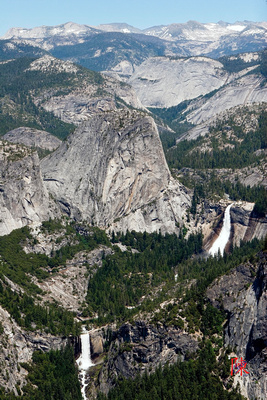
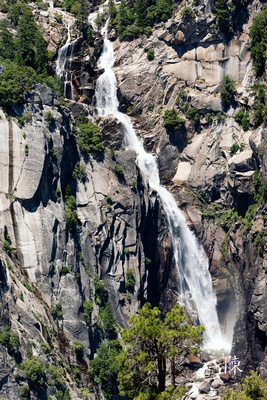
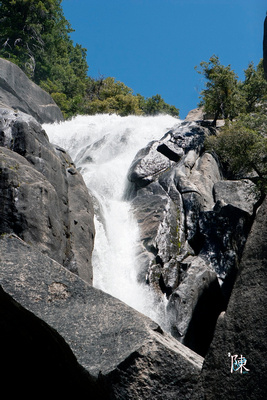
Yosemite National Park, located about 190 miles from San Francisco, is almost doable on a LONG day trip, so long as you don’t want to see everything.  Prodded by the fact that the past winter’s snow pack and longer than average spring rains persisted, news of abundant water flow through the park promised a decent show at the park’s water features.  In past years when there was a lack of rain or snow, one could visit Yosemite Falls and only see a trickle of water at the namesake falls.

Despite the downturn in the economy, occupancy and visitior rates at Yosemite remain high, attesting to the popularity of the park.  Currently, there’s some road construction going on near the intersection of Big Oak Flat Road and El Portal Road which can cause delays.  Water flow is high and should continue so into August due to the continuing melting of the snow pack.  With such water flow, visitors should excercise caution around the water.  Unfortunately, as noted in the news of the day we visited, deaths and injuries can occur if you’re not careful.


At the higher elevations, widflowers can still be found, especuially roadside and in the meadows.

If you’re interested in photography, you should definitely stop by the Ansel Adams Galley in Yosemite Village.

Resources:

Map of Yosemite
CCS Yosemite Photo Gallery
Horsetail Falls


Surprisingly, even in July, roads are closed due to snow.  We attempted to head up to Lava Beds National Monument in Northeastern California last week.  Driving in from the south, one would have to pass by Medicine Lake.  Unknown to us, the roads by medicine lake were closed due to snow, hence making the trip to Lava Beds National Monument a non-event.  Fortunately, not all was lost.  On Medicine Lake road, the paved part, we managed to run into an pseudo ice caved off the side of the road.  It was nice to cool off in this cave!

Destination Ideas for the Bay Area: Brentwood, CA.

In the Bay Area, Memorial Day kicks off the annual Cherry Picking Season.  Brentwood, one of the most popular Cherry Picking Destinations, has seen a steady increase in traffic over the years in terms of visitors during this specific time of year(estimated to be @150,000 per year).  Brentwood, located about 56 miles east of San Francisco, offers a day-trippable destination that has year round u-pick and farm stand choices.

Harvest season for cherries in Brentwood generally runs from Memorial Day Weekend through July 4th weekend.  This year, due to the unusual weather and rains, peak season has varied.  The rains during the weekend of 6/7 forced closure of many u-pick farms.  This past weekend, June 11, 12, was primo for cherry picking.  The skies were partially cloudy and sunny, the weather temperate (at least for the Brentwood area in summer) and the fruit plentiful.  There are numerous venues for different tastes.  In the U-Pick category, our favorite was Bacchini’s Fruit Tree, for Strawberries, you have to go to Chan’s Fruit Stand and in the farm stand category, there’s just too many to choose from.

At Bacchini’s, there was a lot of ripe Bing, Sour and Ranier cherries to choose from as well as white peaches.  The plums were almost barren and others such as Pluots were also almost sold out.

For more information, you can find maps, harvest times and other bits of information at:  http://www.harvest4you.com/.

For more pictures, check out:  http://cchinstudios.zenfolio.com/p825863615.


Having visited Burney Falls over ten years ago, I yearned to return to photograph the falls and area in detail.  Unfortunately, this trip, the trail down to the falls was closed.  It turns out that the trails were closed for the summer and fall of 2010.

The park, officially called McArthur-Burney Falls Memorial State Park, is located within the Cascade Range and Modoc Plateau natural region.  It consists of about 910 acres of forest and five miles of streamside and lake shoreline, including a portion of Lake Britton.  The main attraction is the 129-foot Burney Falls, one of the most visited in the state.

Being in a volcanic region (Lassen Volcanic National Park is not too far away), the landscape was created by volcanic activity as well as erosion from weather and streams.  A constant stream of water emerges from springs at and above Burney Falls.

For more pictures, check out the Burney Falls album.  Since the trails were closed and the sun had set, very limited photos were taken.


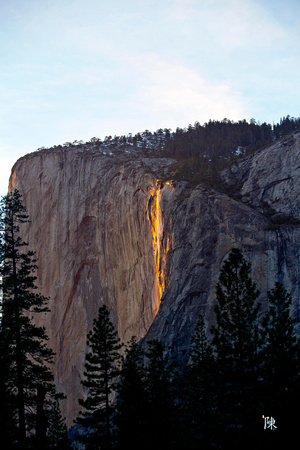
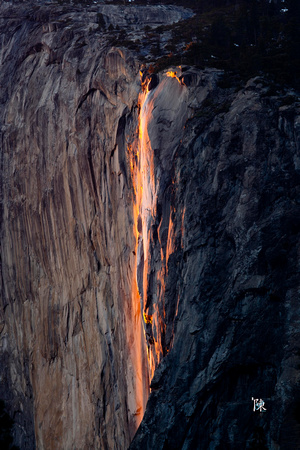
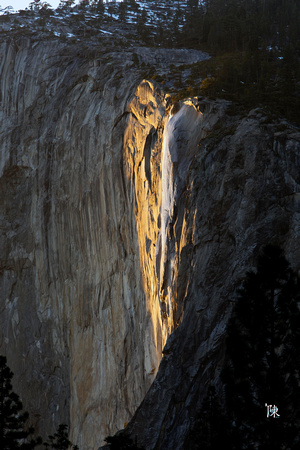
After a long hiatus of not posting here, I’m looking forward to getting out more, getting some captures and sharing them with you.  I recently started viewing the Yosemite Nature Notes series (Produced by Yosemite Conservancy and the park itself) on YouTube which re-ignited the desire to get out there and start shooting again.  The phenomenom that I posted last year at Horsetail Falls is mentioned in Episode 9, Frazil Ice.  In honor of the National Park System, I’ve just started again with the posting for Lassen Volcanic National Park.  Stay tuned for more…

Lassen Volcanic National Park, located in Lassen County in northeastern California, is on the southern end of the Cascade Range.  Lassen Peak last erupted in 1916, when Congress made this a national park.  The eruptions started in May 1914 and forever changed the surrounding area.  Lassen Peak, at 10,457 feet, was formed 27,000 years ago as a volcanic vent on the northern flank of Brokeoff Volcano.

Route 89 is the main road through the park.  Within the park, there are many active volcanic features as well as areas deeply affected by past eruptions like “Devastated Area”.  There are over 150 miles of hiking trails, 17 miles of which are part of the Pacific Coast Trail.  There’s also plenty of backcountry areas, fishing, boating and hunting.

Our only hike during this visit was a short one into Bumpass Hell.  Bumpass Hell is an area named after an early settler who severly burned his legafter falling into a boiling pool.  The hike leads to an area that has the largest concentration of hydrothermic features in the park.  The trail, only about a 3 mile roundtrip at an altitude of 8,000 feet, is a fairly easy one.  At the end, there’s a 100 foot drop into the thermally active basin area.  Sulphur is the dominant smell.

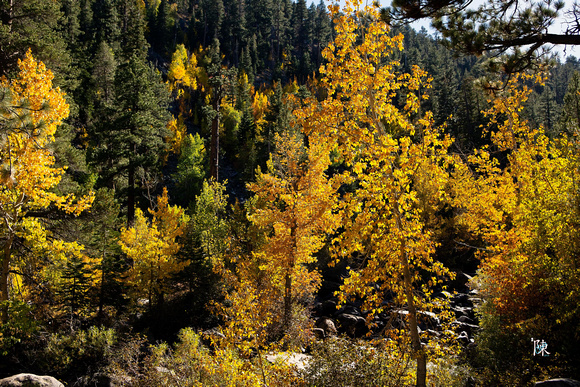
On this particular trip, we were looking for some fall foliage colors.  Unfortunately, we were a bit early, off by maybe a week or two.  The visit was in October, 2010.  Some color was to be found by Manzanita Lake, which was about 30%.  Additional color was found in the northern half of the park between Summit Lake and Manzanita Lake.  More photos can be found at my Lassen Volcanic National Park gallery.


© 2012 C Chin Photo